
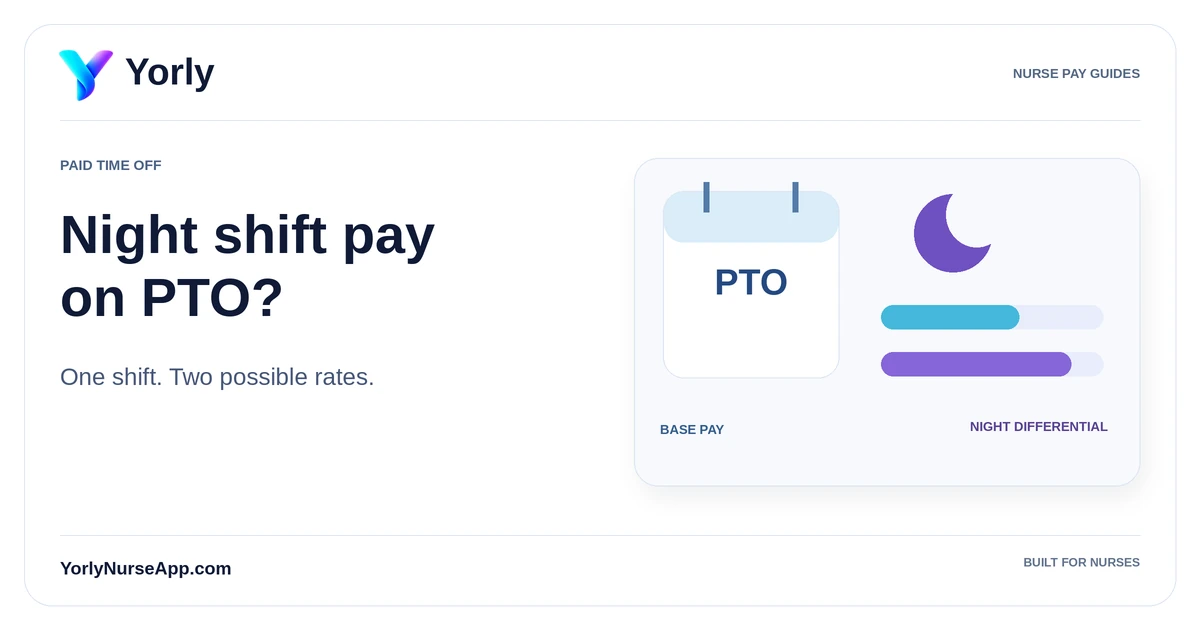
Sometimes. A night or weekend differential on PTO depends on the policy, union agreement, and law that apply to your job and type of leave. A premium you normally earn for working nights doesn’t automatically carry over to vacation. Some agreements do include it. Check the leave rate and pay code before deciding whether a lower amount is a mistake.
Why PTO pay can be different from a worked shift
Your base hourly rate is the starting rate for the job. A shift differential is an additional amount attached to qualifying hours or assignments. PTO compensation pays for leave under a separate rule; its rate might be base pay, include a qualifying premium, or use a different rate formula.
Consider a fictional eight-hour shift at $42 an hour, with a $5 night premium for all eight worked hours. The middle and right cards compare two possible ways that eight hours of PTO could be paid.
Worked night shift
$3768 × ($42 + $5)Base-only PTO
$3368 × $42PTO with night premium
$376If all eight leave hours qualifyThe $40 difference is an illustration. Compare the same hours and look at gross earnings before deductions. A smaller deposit alone doesn’t tell you whether a differential is missing.
FREE SCENARIO COMPARISON · USD
PTO Pay Comparison Tool
Start with the example or enter your own rates. For the second scenario, enter only the PTO hours you want to model as receiving each premium. Use 0 when a premium doesn’t apply. If your policy uses a different base or an average-rate formula, ask payroll what rate to use; this tool doesn’t calculate it.
$40.00 gross difference · Night: $40.00 · Weekend: $0.00
This tool compares scenarios and rounds each pay component to the nearest cent. It does not decide eligibility or wages owed and excludes overtime, holiday premiums, deductions, and taxes. Your entries stay in this browser tab.
YORLY FOR IPHONE
Know what every shift is worth. See what it brings you closer to.
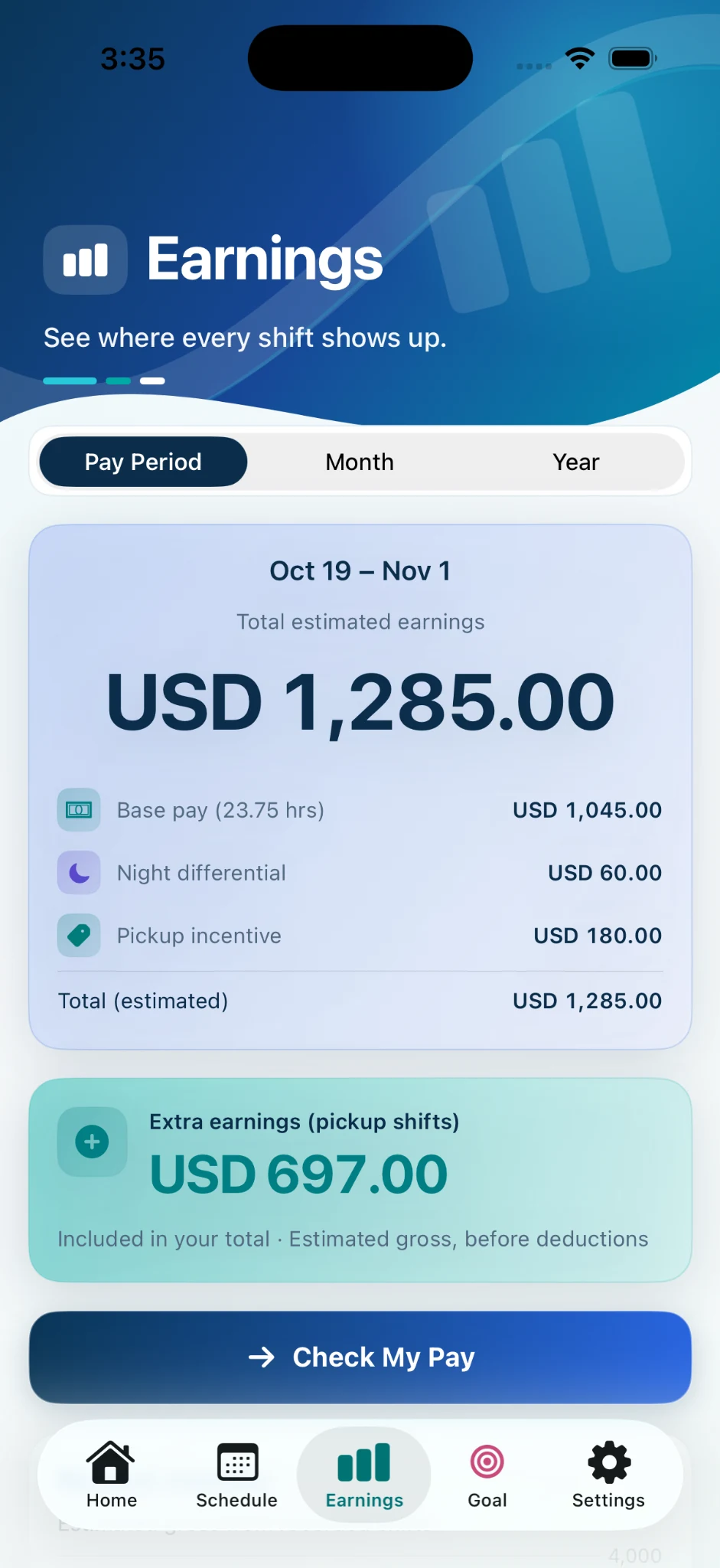
Yorly helps nurses estimate worked-shift earnings, understand differentials and pickup incentives, and track progress toward personal financial goals.
- Know before you pick up.
- Estimate a shift’s gross value before committing your time.
- Watch your earnings LIVE.
- See estimated earnings as you work with Live Shift on supported iPhones.
- Understand your pay picture.
- Compare your worked-shift estimates with your paystub and identify differences to ask about.
- Turn extra shifts into progress.
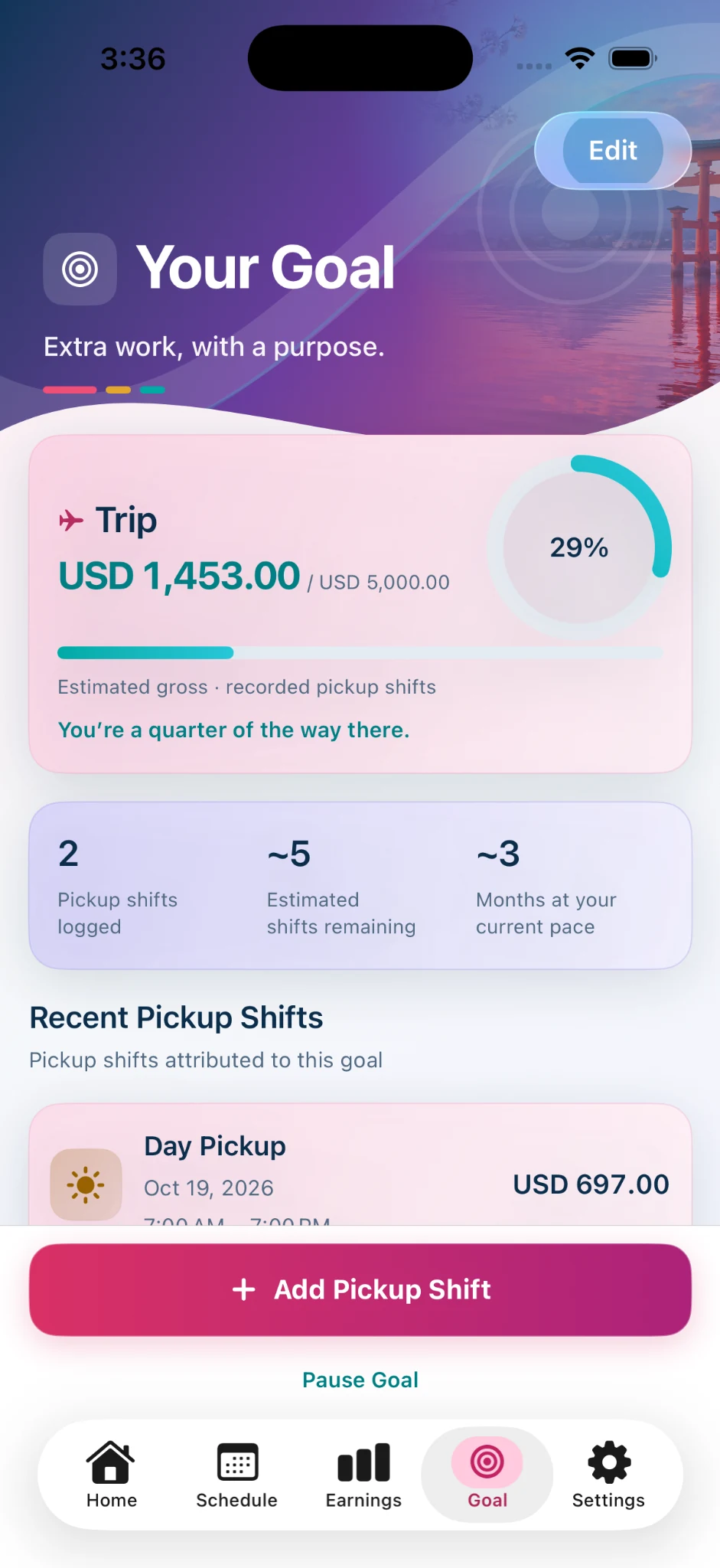
- See how qualifying recorded pickup shifts contribute estimated earnings toward a goal. It isn’t a savings transfer.

Paid monthly and annual subscriptions available. Yorly estimates gross worked-shift pay and does not verify PTO eligibility or employer payroll.
What federal law, employer policy, and union contracts say
The federal Fair Labor Standards Act generally doesn’t require paid vacation or extra pay for night or weekend work. That does not override state or local requirements or tell you what your employer promised. Start with the current policy or contract for your job, then check any law that applies to your type of leave. See the the U.S. Department of Labor’s guidance on paid vacation and leave and extra pay for night and weekend work.
- Base pay only: If the applicable PTO rule pays your base rate and reserves premiums for time worked, an omitted premium may be consistent with the rule.
- Premium follows an assignment or a schedule: The 2026–2029 Contra Costa County and California Nurses Association agreement, §§10.1–10.2, includes shift differential on qualifying paid leave for employees who regularly worked the qualifying shift before leave. For rotating shifts, it looks to the shift the employee was scheduled to work. Its separate weekend shift bonus requires a qualifying shift actually worked. Those provisions cover that bargaining unit, not every nurse or every weekend premium.
- Different rules for sick leave, vacation, and cash-out: California’s paid sick leave FAQ describes how the state calculates pay for covered nonexempt workers using statutory sick leave. That formula can differ from ordinary vacation pay. If you’re cashing out leave instead of taking it, check the separate payout provision; California’s vacation guidance explains protections for earned vacation and payout at separation.
Keep overtime separate. The usual federal overtime calculation is based on hours actually worked, so paid vacation generally isn’t counted as worked time. Read the Department of Labor explanation of paid leave and hours worked and Yorly’s guide to night differential and overtime for how differentials on worked shifts can matter. Specific agreements or laws may provide different or additional benefits.
Five things to check on your paystub
- Base hourly rate. Match the PTO line against your current base rate. Check whether a step increase or assignment change took effect during the pay period.
- PTO hours paid. Match approved leave dates and hours to the pay period. A partial shift or a cutoff date can make two stubs look different.
- Separate differential lines. Night or weekend pay may be rolled into the PTO rate or shown under a separate code. Check the earnings detail or ask for the code breakdown.
- PTO policy or union agreement. Search for “rate of pay,” “paid leave,” “shift differential,” “weekend premium,” and “cash-out.” Verify the effective date and whether the rule applies to your assignment and leave type.
- Corrections or adjustments. Look for a retroactive line on this or the next statement. Ask which date and pay code an adjustment covers before counting it a second time.
For a broader review, use the free paycheck checklist and the nursing paycheck guide. The night differential guide explains how to check a premium on hours you worked.
How to ask payroll about a PTO pay difference
Start with the leave dates, approved hours, and the specific earnings line. Ask for the rate and the written rule used on that paystub. Keep your time-off approval and the relevant statement so you can compare any correction later.
Common PTO pay questions for nurses
Do nurses receive night differential on PTO?
Some do. Look for an express leave-rate provision and check whether it applies to your assignment, leave type, and specific hours.
Is night differential required by federal law?
The FLSA does not require a premium simply for working nights. A policy, agreement, or other applicable law may still affect your pay.
Does weekend differential apply to PTO?
It depends on the weekend premium’s own terms. Some require time actually worked. A provision that includes night differential on leave does not necessarily include weekend pay.
Why is my PTO paycheck smaller than usual?
Compare gross earnings and paid hours first. PTO may have a different rate, your usual pickup incentives may not apply, or an adjustment may post later. Then check deductions if gross pay matches.
Does a union contract change PTO pay?
It can specify leave rates, eligibility, and corrections. Use the current agreement for your bargaining unit and verify whether a side letter changes the rule.
How can I check whether my PTO was paid correctly?
Match the approved hours and type of leave to the statement. Then compare the rate and pay code against the applicable policy. Ask payroll for the calculation if the statement doesn’t show it clearly.
The takeaway
Use your worked-shift earnings as a reference point. Then use the applicable leave rule and approved hours to check your PTO pay. If the numbers differ, bring the leave dates, pay code, and written rule to payroll or your union representative.
This U.S. guide provides general education, not individualized legal, payroll, or employment advice.
KEEP TRACK OF WHAT YOUR WORK COULD EARN
Make every shift count.
You work hard for your earnings. Yorly helps you see what your shifts could earn and what they bring you closer to.
Explore Yorly for iPhone